


Imagine a system that makes your day-to-day tasks, and future planning, a little easier. Sounds good, right? It’s the same reason we carry computers in our pockets, shop online with ease, and rely on technology to simplify our lives.
Enter Learning Management Systems (LMS). Whether you want to onboard staff faster, improve compliance, boost engagement, or support blended learning, a strong LMS equips you with the tools to do it all. LMS platforms are truly transformative, so much so that there are now 73.8 million LMS users worldwide.
But here’s the challenge: choosing the right LMS for your organization. The market is crowded, and not every platform will deliver the outcomes you need. At Kallidus, we want you to find a learning platform that not only accelerates compliance, builds skills, and drives performance but also generates measurable business results.
That’s why we’ve put together this list of the Top 10 Learning Management Systems. Using insights from the leading platform review site G2, this guide will help you compare options and zero in on the LMS that’s the perfect fit for your organization.
Based on the latest G2 listings for Top Learning Management Systems in Europe and Top Corporate Learning Management Systems in Europe, here is our list:
- Kallidus Learn LMS
- 360Learning
- Leapsome
- Absorb LMS
- Docebo
- Learn Amp
- Learn Upon LMS
- Canvas LMS
- Moodle
- Sana Learn
First up, let’s look at what an LMS actually is:
What is an LMS?
An LMS is a platform that allows you to manage every facet of workplace learning, from creating and delivering training to tracking progress and reporting on results, helping you drive measurable outcomes.
Put simply, an LMS is your all-in-one hub for learning and development.
Most LMS platforms have two key interfaces:
- Admin view – where learning and development (L&D) teams create and manage courses, enrol learners, and monitor training results.
- Learner view – where employees can access mandatory training, browse optional courses, and track their own development journey.
As well as tracking learning, your LMS delivers online training materials to various audiences, on-demand. And you’re not restricted to one form of learning. Everything from courses and quizzes to videos, and real-time instructor-led sessions; with an LMS, you’re ensuring that your employees can access training that suits them, and you can cater for different learning styles. For your desk, and deskless learners, an LMS has something for everyone.
The best part? An LMS supports a wide variety of formats, from interactive courses, videos, and quizzes to real-time virtual classrooms and in-person workshops. Whether you have desk-based teams or frontline staff, an LMS makes learning accessible anywhere, anytime.
What are the benefits of an LMS?
1.Reduce L&D costs
An LMS makes it easy to shift a lot of learning online, giving you huge cost savings on training rooms, travel expenses, and sourcing learning materials. According to Brandon Hall Group, companies that use an LMS save an average of 40–60% on training costs compared to traditional methods.
2. Save time with automation
From auto-enrolling new hires into onboarding programmes to sending compliance reminders, an LMS takes care of repetitive admin tasks. This not only saves HR and L&D teams hours of work each week but also ensures new employees get the right training from day one, improving retention and reducing costly churn.
3. Stay compliant (without the stress)
Whether it’s health and safety, GDPR, or industry-specific regulations, an LMS makes it easy to assign and track compliance training. Automated notifications help learners stay on top of deadlines, while centralized reporting gives you the data you need when audits roll around.
4. Track and measure progress
With built-in analytics and reporting tools, you can see exactly how employees are progressing, identify skill gaps, and measure the impact of your L&D strategy. LinkedIn’s Workplace Learning Report found that 89% of L&D pros agree proactively building employee skills will help navigate the evolving future of work… and an LMS gives you the data to make this happen.
5.Boost employee retention
Here’s a stat worth remembering: 94% of employees say they would stay longer at a company that invests in their learning and development. By offering accessible, personalized learning opportunities through an LMS, you’re showing your people that their growth matters, which keeps them engaged, motivated, and loyal.
6. Enhance performance and growth
Continuous learning drives continuous improvement. An LMS encourages a growth mindset by making learning easy to access and relevant to performance goals. Managers can link training to performance reviews, assign skill-building courses, and unlock hidden talents within their teams. A great LMS will allow you to align performance to business outcomes, driving organisational success.
Key Features of LMS Systems
Choosing the right LMS in 2026 means looking beyond basic course delivery. Modern LMS platforms are powerful learning ecosystems that drive engagement, performance and measurable organisational value.
1.Analytics & Reporting
A robust analytics engine is vital for measuring learner progress, performance trends and training impact. LMS dashboards help L&D leaders spot engagement gaps, evaluate content effectiveness, and make data‑driven decisions that correlate learning to business outcomes. Advanced reporting tools help support compliance, audit reporting and ROI measurement. 45% of LMS users cite analytics and reporting as a key capability they want, especially to optimise training performance.
2. Compliance Tracking & Certification
For regulated industries (e.g., finance, healthcare), compliance is the primary driver of LMS adoption. In fact, 73% of organisations say compliance is their top LMS use case. Certification features ensure that employees complete required training, maintain credentials, and meet legal or safety standards. This directly reduces organisational risk and improves audit readiness.
3. Mobile & On‑Demand Learning
Learners now expect training on their terms, just like consumer apps. LMS platforms optimised for mobile enable learning anytime and anywhere, which increases engagement and completion rates. Both responsive design and dedicated mobile apps are key.
4. Integrations With Enterprise Software
Seamless integration with HR, CRM, productivity and communication tools reduces administrative overhead and unifies learning with existing workflows. For example, HRIS integration automatically enrols employees into required programs based on role or location, while CRM integration brings product training directly into sales workflows.
52% of LMS users say poor integration is a top pain point.
5. Content Management & Course Delivery
Modern LMSs should provide versatile content support, from text and video to simulations, quizzes and SCORM content, so organisations can create dynamic learning experiences that cater to diverse learner needs.
Flexible content authoring tools help teams rapidly build, update and recycle courses without relying on external developers.
6. Personalisation & Adaptive Learning
AI‑powered personalisation is increasingly common. In fact, AI usage in LMS platforms is growing 35% annually. With AI, LMS platforms can tailor content to individual learners based on behaviours, performance and skill gaps. This improves relevance and motivates learners to complete modules.
7. Engagement Tools: Gamification & Social Learning
Gamification features (points, badges, leaderboards) make learning more interactive and enjoyable. Research shows that gamified training increases engagement and knowledge retention vs traditional learning methods, and 83% of learners say gamification motivates them more in an LMS.
8. Automation & Workflow Efficiency
Automated features, such as enrolments, reminders, certification renewals, grading and notifications, free L&D teams from repetitive tasks, so they can focus on strategic outcomes rather than admin. Learn how Kallidus Learn LMS reduced admin time for the team at J&E Hall.
9. Scalability & Cloud‑Based Delivery
Cloud LMS platforms scale easily with organisational growth, support remote teams and eliminate maintenance overhead. This is critical as organisations invest in continuous learning programs spanning hundreds to tens of thousands of learners.
10. Security & Compliance Features
Data privacy and user security are non‑negotiable in 2026. Features like role‑based access, audit trails, single sign‑on (SSO) and compliance with global privacy standards (e.g., GDPR) help protect learner data and organisational systems.
Top 10 Learning Management Systems
1. Kallidus Learn LMS
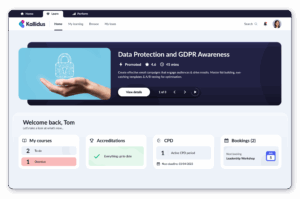
Kallidus Learn is an intuitive and award-winning LMS designed to accelerate compliance, build skills, and drive performance. It provides everything organizations need to onboard new starters, exceed compliance requirements, and foster continuous learning. With a focus on automation and usability, Kallidus Learn delivers training seamlessly while reducing administrative overhead for managers and HR teams.
Learners benefit from a clean, mobile-first experience, accessing training whenever and wherever they need it. With Kallidus Learn, you can deliver engaging, personalized learning experiences that equip employees with the right skills at the right time. Its robust analytics and reporting capabilities allow you to identify knowledge gaps, track progress, and demonstrate the impact of learning on organisational performance. With AI-powered tools, you can quickly build, import, and manage skills, allowing you to focus on closing the skills gap. By aligning learning with business objectives, Kallidus Learn empowers teams to improve productivity, enhance performance, and drive measurable outcomes for your organization.
Key features:
- Intuitive, mobile-friendly interface
- AA accessible content – WCAG AA-compliant materials for inclusive training
- Automated compliance, refresher training, and reminders
- Links learning with performance to drive business outcomes
- Supports SCORM, xAPI, video, and document formats
- Robust reporting with Power BI for actionable insights
- Manager and learner dashboards to track compliance progress in real time
- HRIS integrations for seamless data management
- AI powered skills tagging
- Award-winning implementation and customer support teams

2. 360Learning
360Learning combines LMS functionality with collaborative learning, enabling organisations to leverage the knowledge of subject-matter experts across the business. Its social learning features make it possible for learners to interact with content and each other, helping to turn internal expertise into accessible resources.
Key features:
- Collaborative course authoring tools
- Social learning features such as peer feedback and discussion forums
- Automated workflows for course delivery and enrolments
- Engagement analytics to measure learner participation
- Combines structured and discovery-based learning
3. Leapsome
Leapsome integrates learning with performance and people development, making it suitable for organisations that want a platform covering both training and employee growth. It offers learning paths linked to roles and skills, alongside tools for goal setting, feedback, and engagement.
Key features:
- Learning paths aligned with roles and skills
- Built-in OKR and performance management tools
- Employee feedback and survey functionality
- Blended learning with live and self-paced options
- Analytics for monitoring learner progress
4. Absorb LMS
Absorb LMS is designed to meet the needs of organisations of all sizes, including enterprises with global reach. Its cloud-based platform supports multiple forms of learning, from eLearning to instructor-led sessions, and provides strong reporting capabilities for tracking progress and compliance.
Key features:
- Cloud-based and scalable infrastructure
- Support for blended and online learning
- Content authoring and management tools
- Multi-language capabilities for global learners
- Reporting for compliance and learner engagement
5. Docebo
Docebo is an LMS that makes use of AI to deliver personalised learning experiences. Its flexibility allows organisations to create branded learning environments for different audiences, while administrators benefit from strong reporting and analytics.
Key features:
- AI-powered recommendations and learning paths
- Customizable portals and white-labelling
- Support for multiple content types and formats
- Robust reporting and data analytics
- Integrations with a wide range of business systems
6. Learn Amp
Learn Amp positions itself as a learning and people development platform, combining LMS capabilities with employee engagement and performance features. It supports structured training while also offering tools for collaboration and knowledge sharing.
Key features:
- Combines learning, engagement, and development in one system
- Curated content marketplace and libraries
- Social and collaborative learning features
- Advanced permissions and branding options
- Analytics and insights into learning activity
7. LearnUpon LMS
LearnUpon is an LMS known for its user-friendly interface and multi-tenant functionality. It helps organisations deliver training to employees, customers, and partners through one central system, with features that support both online and blended learning.
Key features:
- Easy-to-use platform design
- Multi-tenant support for multiple audiences
- Blended learning delivery options
- Flexible assessments and certifications
- Strong customer support and implementation resources
8. Canvas LMS
Canvas LMS has been widely adopted in the education sector but is also used by corporate organisations for training. It offers a modular structure for building courses and integrates with a wide range of third-party tools, including virtual classrooms and content providers.
Key features:
- Modular course design and multimedia support
- Integrations with virtual classrooms and third-party apps
- Comprehensive assessment and grading functionality
- Access to a global user community and plugin library
- Suitable for both education and corporate training
9. Moodle
Moodle is one of the most established LMS platforms, with a large global user base. Being open source, it gives organisations the freedom to customize the platform to suit their needs, supported by an extensive ecosystem of plugins and themes.
Key features:
- Open-source platform with extensive customisation options
- Wide plugin and theme ecosystem
- Support for blended and online learning
- Flexible assessment and certification options
- Multi-language capabilities for international use
10. Sana Learn
Sana Learn is an LMS that uses AI to provide adaptive and personalised learning. It includes built-in authoring tools for content creation and delivers data-driven insights to help organisations measure the effectiveness of their training.
Key features:
- Adaptive learning paths powered by AI
- Personalised content recommendations
- Built-in content authoring tools
- Analytics and learner insights
- Supports training for employees, partners, and customers
Finding ‘the one’
Choosing the right LMS isn’t just about ticking boxes – it’s about finding a system that genuinely makes learning easier, more engaging, and more effective for your organisation. The ideal LMS helps you streamline day-to-day training, simplify compliance, and plan for the future, all while supporting your people to grow and perform at their best.
Ultimately, the “right” LMS is the one that fits seamlessly into your workflow, supports your people, and scales alongside your ambitions. With the insights and comparisons provided in our Top 10 LMS list, you’re one step closer to finding the platform that will transform learning in your organization.
Discover how Kallidus Learn LMS is the right LMS for you. Book a personalised demo today.
FAQ
What is an LMS software?
An LMS (Learning Management System) is software that delivers, tracks, and reports on learning programs. It centralises training, supports compliance, and measures learning outcomes.
What is the most commonly used LMS?
Popular LMS platforms include Kallidus Learn, Docebo, Moodle, and Cornerstone OnDemand, chosen for usability, scalability, and reporting capabilities.
What are the key features of an LMS?
Key LMS features include analytics and reporting, compliance tracking, learning paths, content management, mobile access, scalability, and integrations with HR and performance tools.

Claire Moloney

